Latest News
Recent updates on my research, teaching, and related activities at NTU’s College of Computing & Data Science.

SC1007 Data Structures and Algorithms wins the 2026 GMA Award for Outstanding Courses
The Global MOOC and Online Education Alliance (GMA) has recognised Data Structures and Algorithms, Nanyang Technological University, Singapore, with the 2026 GMA Award for Outstanding Courses. The course was selected as one of 10 GMA Award-winning courses worldwide and received the highest overall evaluation score among the 10 winning courses, following evaluation by an international committee of education experts and learners drawn from UNESCO and other leading institutions.
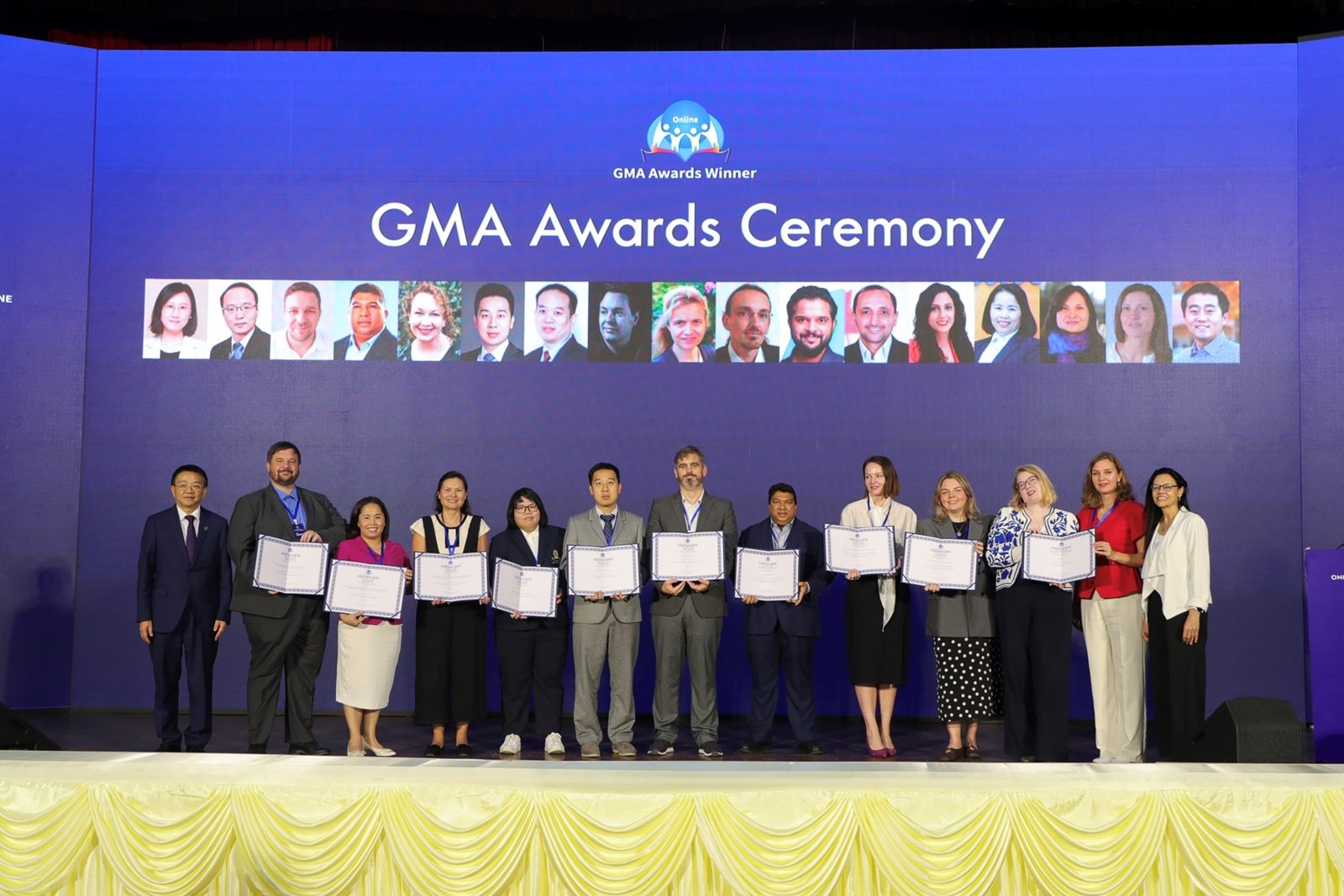
At the heart of the course is AlgoGPT, the AI-powered learning platform that supports students to learn with AI while continuing to develop independent thinking and problem-solving skills.
GMA Awards 2026 winners announcement →Dr Fernando receives NTU’s 2026 John Cheung Emergent Technology Award
Dr Owen Noel Newton Fernando has received the 2026 John Cheung Emergent Technology Award, Nanyang Technological University (NTU), Singapore. He was recognised for the development and application of AlgoGPT, an AI-supported learning platform for Data Structures and Algorithms education.
About AlgoGPT →Two Learning with AI papers accepted at ASCILITE 2026
Two papers from our team have been accepted for publication at ASCILITE 2026 — the 43rd International Conference on Innovation, Practice and Research in the Use of Educational Technologies in Tertiary Education — held in Brisbane, Australia, from 29 November to 2 December 2026.
- C. Y. Tan, O. N. N. Fernando, J. H. M. Tan, C. A. Ong, T. R. Merritt, & V. F. Lim (2026). “Learning Companion for Students’ Critical Reasoning and Academic Writing.” Accepted
- O. N. N. Fernando, D. L. M. Xuan, M. Siddhanth, C. A. Ong, T. R. Merritt, & C. L. G. Quek (2026). “Bridging the Articulation Gap: A Multi-Agent Conversational AI Platform for Compassionate Scaffolding of Technical Interview Skills.” Accepted
The papers extend our Learning with AI research programme to graduate critical reasoning and academic writing, and to AI-supported preparation for technical interviews.
See Learning with AI publications →Four papers accepted at Redesigning Pedagogy International Conference 2026
Four papers from our team — three full papers and one poster — have been accepted to the Redesigning Pedagogy International Conference (RPIC) 2026, NTU’s premier annual education conference, hosted by the National Institute of Education and Nanyang Technological University, Singapore, on 2–4 June 2026. The conference theme is “Growing Future-Ready Teachers and Learners: Collaborative Research for Educational Change.”
- Y. W. Tuck, Y. C. L. Kyle, T. J. H. Mark, O. C. Ann, T. R. Merritt, V. L. F. Victor, O. N. N. Fernando (2026). “Automated Lesson Analysis for Lesson Microgenres and Spatial Pedagogy.” Full Paper
- P. S. Win, G. W. Qiming, M. Bansal, O. C. Ann, L. F. Siong, O. N. N. Fernando (2026). “NALA-Assess: A Learning Analytics–Driven Generative AI Agent for Self-Regulated Learning.” Full Paper
- V. L. Fei, T. J. H. Mark, O. C. Ann, T. C. You, O. N. N. Fernando (2026). “Designing and Implementing Generative AI Chatbots for Improving Graduate Students’ Critical Reasoning and Academic Writing.” Full Paper
- Y. H. Goh, W. Y. Tan, L. F. Siong, A. T. S. Keong, O. C. Ann, S. N. S. Hwee, O. N. N. Fernando (2026). “Microteaching Simulation for Teaching Assistants.” Poster
Together these papers cover automated classroom-observation analytics, learning-analytics-driven AI agents for self-regulated learning, generative-AI chatbots for graduate critical reasoning and writing, and AI-driven microteaching simulations — all rooted in our Learning with AI research programme.
Visit conference site →AlgoGPT featured among five CCDS pilot projects bridging theory and real-world application
AlgoGPT — our AI tutoring platform for data structures and algorithms — has been featured by NTU’s College of Computing and Data Science as one of five pilot projects developed under the Learning with AI framework, showcasing how active learning is being put into practice across the College.
The piece highlights how CCDS projects are bridging the gap between classroom theory and the real-world contexts in which graduates will work. AlgoGPT, deployed in SC1007 Data Structures & Algorithms, illustrates how a multi-agent AI tutor can support self-regulated learning, manage cognitive load, and align assessment with reasoning — rather than rote answers.
Read full article on NTU CCDS →Learning with AI: Strengthening Computing Education in an AI-Shaped World
NTU’s College of Computing and Data Science (CCDS) is embedding artificial intelligence into the way computing is taught, practised, and assessed through its Learn with AI framework, while maintaining a strong emphasis on computational foundations, accountability, and engineering judgement.
The framework reflects rapid advances in AI — particularly large language models that can generate, explain, test, and refine code — and reshapes both curriculum and assessment so that students develop strong fundamentals while learning to operate effectively in AI-enabled development environments and alongside agentic AI systems.
Dr Newton Fernando, faculty member responsible for the Data Structures and Algorithms course, said the changes are designed to ensure students continue to develop a deep understanding of computing fundamentals even as AI tools become more widely used in practice.
Our research group’s work on AlgoGPT is part of this broader CCDS initiative to design educational technologies that strengthen, rather than substitute, learner agency.
Read full article on NTU CCDS →Stay Connected
For more on our published work, see the Publications page; for ongoing projects and the broader research agenda, see Research; and to enquire about collaboration or PhD/Master’s positions, head to the Join Us page.