Nanyang Technological University · Singapore
Small building blocks.
Extraordinary
materials.
We combine statistical physics, computer simulation, and machine learning to understand and design soft materials—from active particles to programmable assemblies.



Swipe left or right to change figures
Research directions
Finding the principles.
Designing the possibilities.
Matter in motion
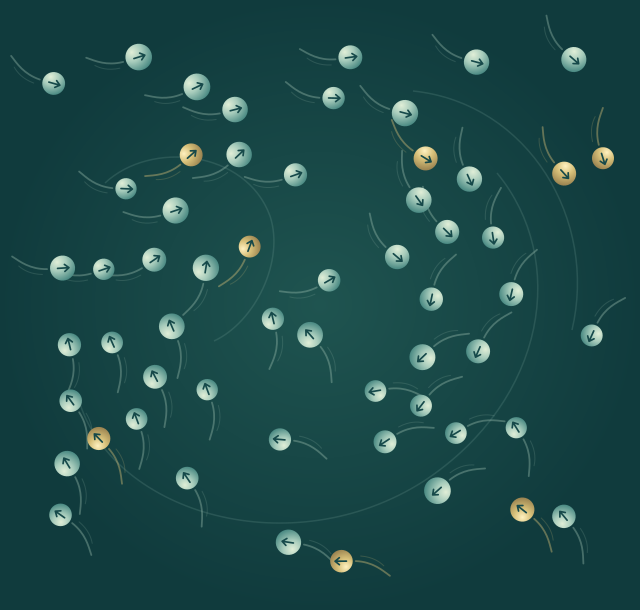
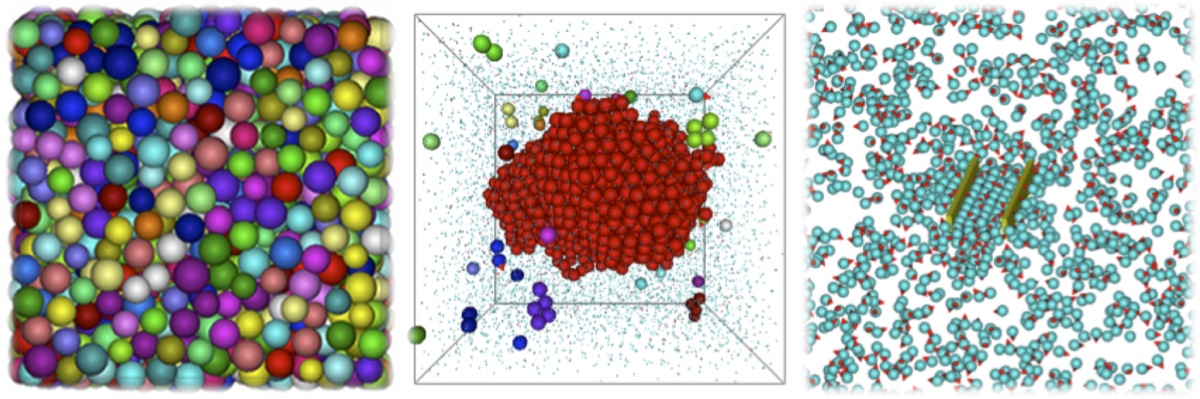
Active particles convert energy into motion, creating structures and collective behaviour far from equilibrium. We study their dynamics and use activity to direct the assembly of passive building blocks.
Explore the research 02 / Interactions by design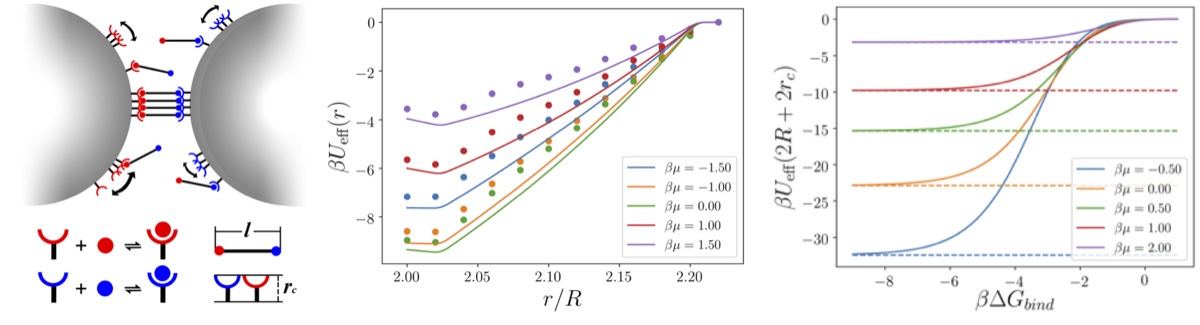
Programming self-assembly
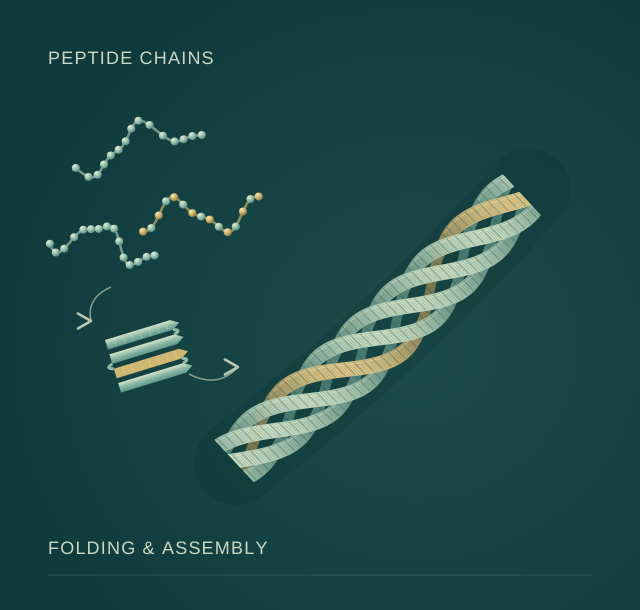
DNA-coated colloids offer a route to materials whose building blocks assemble through designed interactions. We combine simulation and analytical theory to understand and control this assembly.
Explore the research 03 / Finding unlikely pathways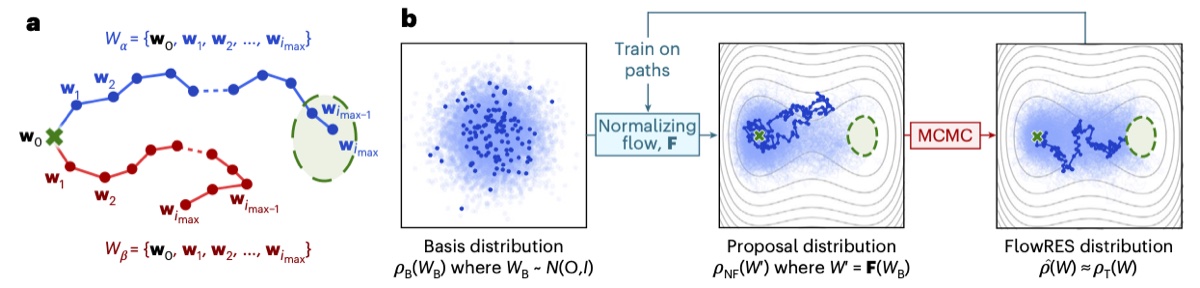
Learning rare events
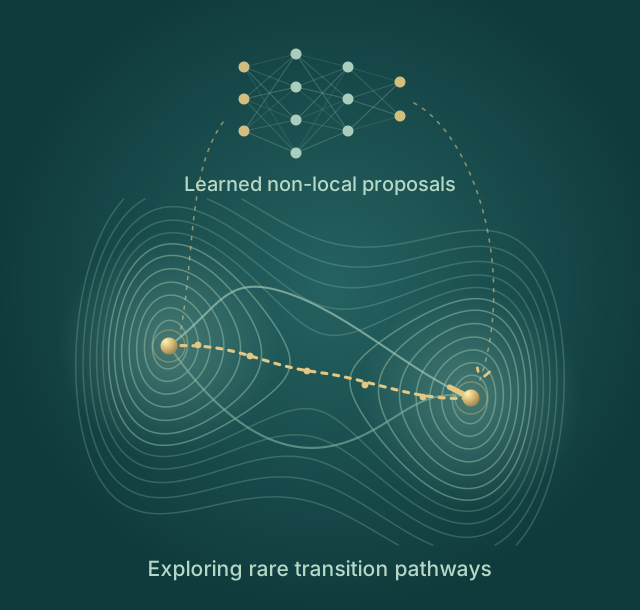
Rare transitions can determine a system’s behaviour while remaining difficult to observe in simulation. We develop physics-informed machine learning methods to sample their pathways efficiently.
Explore the researchSelected work
Ideas into discoveries.
Spatiotemporally correlated activity regulation of random-organizing hyperuniform states
Yuhan Peng#, Yusheng Lei#, and Ran Ni*. submitted (2026)
Curvature-guided depletion stabilizes Kagome superlattices of nanocrystals
Siyu Wan#, Xiuyang Xia#, Yutong Gao, Heyang Zhang, Zhebin Zhang, Fangyue Xu, Dong Yang, Tongtao Li*, Jianfeng Li*, Ran Ni*, and Angang Dong*. Science, 387, 978 (2025) [Highlighted in Science]
Efficient Rare Event Sampling with Unsupervised Normalising Flows
Solomon Asghar, Qing-Xiang Pei, Giorgio Volpe* and Ran Ni*. Nature Machine Intelligence 6, 1370 (2024)
Curiosity is a good starting point
Let’s explore what
matter can do.
We connect theory and simulation with experimental collaborations to investigate the behaviour of soft matter, in and out of equilibrium.