Professor Jagath
Rajapakse
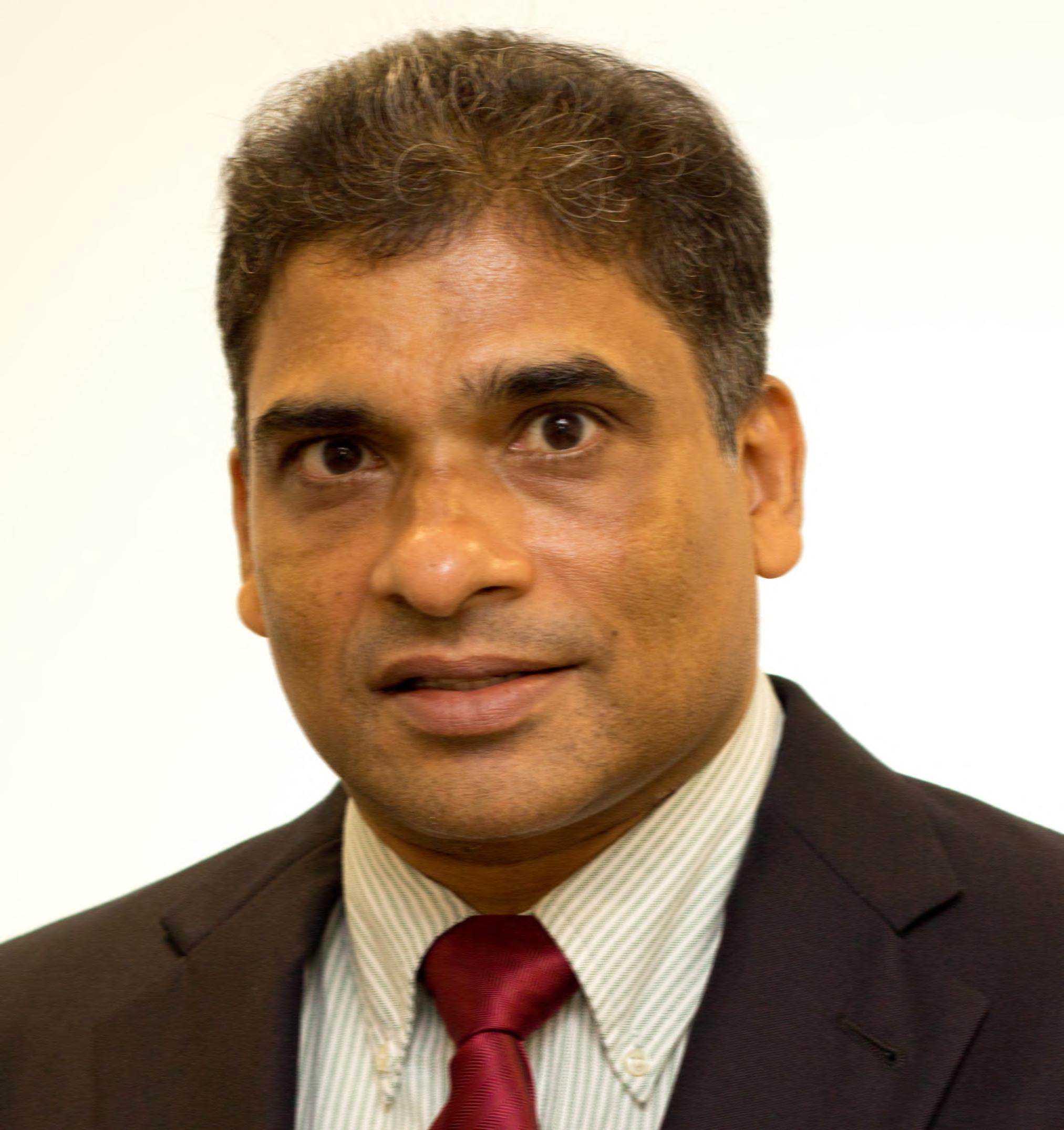
Jagath
Rajapakse is Professor of Data Science at the College of Computing and Data
Science at Nanyang Technological University (NTU), Singapore. He has BSc
degree in Electronics and Telecommunication Engineering from University of
Moratuwa (UM), Sri Lanka, and MS and PhD degrees in Electrical and
Computer Engineering from University at Buffalo (UB),
USA. He was Visiting Scientist to the Max-Planck Institute of Cognitive and
Brain Sciences, Germany, and the National Institute of Mental Health, USA
before joining NTU. He was Visiting Professor to the Department of Biological
Engineering at Massachusetts Institute of Technology (MIT).
Professor
Rajapakse’s research works are in the areas of explainable AI, generative AI,
brain imaging, and computational and systems biology. He has published over 300
peer-reviewed research articles in high-impact journals and conferences, which
are listed here. His current research
works focus on developing computational techniques and tools for diagnosis and
treatment of brain diseases by combining neuroimaging and multi-omics data; and
for generating small molecule and peptide-based drugs for cancer. He is also
looking into how imaging data can be integrated with multi-omics (genomics,
proteomics, transcriptomics, and epigenomics) data for investigating molecular
underpinnings of various diseases.
He
serves as Editor for Engineering Applications in Artificial Intelligence journal
(IF = 8.0) and served as Associate Editor for IEEE Transactions on medical
imaging, IEEE Transaction on neural networks and learning systems, and IEEE
Transactions on computational biology and bioinformatics. He was a Fulbright
Scholar and elevated to IEEE Fellow in 2012 in recognition of his contributions
to brain image analysis.

TEACHING
RECENT
PUBLICATIONS
1.
A. Niwarthana and J.
C. Rajapakse, “LABMA: Latent bottleneck attention-based architecture for integration
of transcriptomics, proteomics, and MRI in neurodegeneration,” Computers in
Biology and Medicine, Volume 210, 1 July 2026. IF = 6.3, DOI: https://doi.org/10.1016/j.compbiomed.2026.111740
2.
J. Xia, Y. H. Chan, D. Girish, C. Wang, and J. C. Rajapakse,
“Learning brain structure-function interactions via modality-guided
attention-based graph neural networks,” Information Fusion, 135, 104426,
April 2026, IF = 15.5, DOI: https://doi.org/10.1016/j.inffus.2026.104426
3. T. N. B. Sayuti, K. Mittal, T. L. Heng, J.
C. Rajapakse, “Target-aware latent diffusion
model for design of apoptosis-inducing anticancer peptides,”
Computers in Biology and Medicine, Volume 199, December 2025, 111286, IF = 6.3
https://doi.org/10.1016/j.compbiomed.2025.111286
4. D. Girish, Y.
H. Chan, S. Gupta, J. Xia, and J. C. Rajapakse, “Encoding and decoding of brain dynamic
connectivity for ADHD diagnosis,” IEEE Journal of Biomedical and
Health Informatics, IF = 6.8, DOI:
https://ieeexplore.ieee.org/abstract/document/11399873
5.
J. Xia, Y. H. Chan, D. Girish, Q. H. Chew, K.
Sim, and J. C. Rajapakse, “Disentangling shared and unique brain
functional changes associated with clinical severity and cognitive phenotypes
in schizophrenia via deep learning,” Communications Biology, 8: 1215, 13
Aug 2025, IF = 5.2 https://www.nature.com/articles/s42003-025-08637-0
6.
P. Lyu, X. Yu, J. Chi, H. Wu, C. Wu, and J.
C. Rajapakse, “TwinsTNet: Broad-view twins transformer network for bimodal
salient object detection,” IEEE Transactions on Image Processing, Vol
34, pp. 2796-2810, May 2025, IF = 10.8, DOI: 10.1109/TIP.2025.3564821
7.
J. Xia, Y. H. Chan, D. Girish, and J. C.
Rajapakse, “Interpretable modality-specific and interactive graph
convolutional neural networks on brain functional and structural connectome,” Medical
Image Analysis, Vol. 102, 25 February 2025, 103509, IF= 10.7. DOI: https://doi.org/10.1016/j.media.2025.103509
8.
C. Wang, G. A. Kumar, and J. C. Rajapakse,
“Drug discovery and mechanism prediction with explainable graph neural
networks,” Scientific Reports, Vol. 15, Issue 1, pp. 179, January 2025,
IF = 3.8, DOI: https://www.nature.com/articles/s41598-024-83090-3
9.
C.
Wang, H. H. Ong, S. Chiba, Jagath C Rajapakse, “GLDM: Hit molecule
generation with constrained graph latent diffusion model,” Briefings in
Bioinformatics, 2024, Volume 25,
Issue 3, May 2024, bbae142, https://doi.org/10.1093/bib/bbae142
10. J. C. Rajapakse, C. H. How, Y. H. Chan, L.
C. P. Hao, A. Padhi, V. Adrakatti, I. Khan, and T. Lim, “Two-stage approach to
intracranial hemorrhage segmentation from head CT images,” IEEE Access,
2024, IF: 3.9, DOI: https://doi.org/10.1109/ACCESS.2024.3393231
11. S. Goyal and J. C. Rajapakse, “Self-supervised learning for
hotspot detection and isolation from thermal images,” Expert Systems with
Applications, Vol 237, Part B, 1 March 2024, p. 12156, IF = 8.665, DOI: https://doi.org.remotexs.ntu.edu.sg/10.1016/j.eswa.2023.121566
12. Y. H. Chan, W. C. Yew, Q. H. Chew, K. Sim, and J.C. Rajapakse,
“Elucidating salient site-specific functional features and site-invariant
biomarkers in schizophrenia via deep neural networks,” Scientific Reports,
13, Article number: 21047, 2023, IF= 4.6, DOI: https://www.nature.com/articles/s41598-023-48548-w
13. W. K. Soh, H. Y. Yuen, and J.C. Rajapakse, “HUT: Hybrid U-Net
transformer for brain lesion and tumor segmentation,” Heylion, 9 (2023),
e22412, IF = 4.0, DOI: https://doi.org/10.1016/j.heliyon.2023.e22412
14. Y. Zhang, X. He, Y. H. Chan, Q. Teng, and J. C. Rajapakse,
“Multi-modal graph neural network for early diagnosis of Alzheimer’s disease
from sMRI and PET scans,” Computers in Biology and Medicine, 2023, Vol.
164, p. 107328, IF = 7.7, DOI: 10.1016/j.compbiomed.2023.107328
15. S. Xiao, H. Lin, C. Wang, S. Wang, and J. C. Rajapakse, “Graph
neural networks with multiple prior knowledge for multiomics data analysis,” IEEE
Journal of Biomedical and Health Informatics, 2023, Vol 27(9), pp. 4591 –
4600, IF = 7.021, DOI: 10.1109/JBHI.2023.3284794
16.
C. Wang, L. W. Lue, R.
Kaalia, P. Kumar, and J.C. Rajapakse, “Network-based integration of
multi-omics data for clinical outcome prediction of neuroblastoma,” Scientific
Reports, 2022, 12:15425, IF = 4.996, DOI: https://www.nature.com/articles/s41598-022-19019-5
17. C. Wang, X. Lye, R. Kaalia, P. Kumar, and J. C. Rajapakse, “Deep learning and multi-omics approach to predict drug responses in cancer,” BMC Bioinformatics, 2021:22:632, IF = 3.169, https://doi.org/10.1186/s12859-022-04964-9, Sept 2022
18.
Y. H. Chan, C. Wang, W. K.
Soh, and J. C. Rajapakse, “Combining neuroimaging and omics datasets for
disease classification using graph neural networks,” Frontiers of
Neuroscience, IF = 4.677, 23 May 2022, DOI: https://doi.org/10.3389/fnins.2022.866666
19. S. Gupta, M. Lim, and J. C. Rajapakse, “Decoding task-specific and task-general architectures of the brain,” Human Brain Mapping, 43: 2801 - 2816, IF = 4.554, February 2022, DOI: https://onlinelibrary.wiley.com/doi/epdf/10.1002/hbm.25817
FUNDED
PROJECTS
1. ``De novo anti-cancer therapeutic agent design in
equivariant 3D space with conditional diffusion models,” AcRF Tier-2 Grant,
Ministry of Education (MOE), Singapore, 01/08/2025 – 31/07/2028, $816,192.00
2. ``Elucidating brain structure-function interaction
implication in brain diseases via explainable AI,” AcRF Tier-1 Grant, Ministry
of Education (MOE), Singapore, RG15/25, 01/11/2024 – 30/10/2026, $185,000.00
3. ``Deep generative approach for de novo cancer drug
discovery with desired mechanism of action,” AcRF Tier-1 Grant, Ministry of
Education (MOE), Singapore, 01/11/2023 – 31/10/2024, $100,000.00
4. “Software application for thermal image analytics,”
$130,000 grant from Wonder Engineering Technologies, Singapore,
04/04/2022 – 03/04/2024
2. “Decoding the connectome by deep encoding on
graphs,” AcRF Tier-2 Grant, Ministry of Education, Singapore,
02/02/2022 – 01/02/2025, $730,249.00
3. “Developing
unsupervised machine learning techniques for discovering novel ocular and brain
imaging biomarkers of Alzheimer’s disease,” $169,000.00 grant from MSD
International GMBH, 01/10/2021 – 31/09/2023
4. “Machine
learning for demand forecasting,” $263,000.00 grant from Becton Dickinson
Holding Pte. Ltd., 30/04/2021 – 29/04/2023
5. “Multilayer
networks for identification of biomarkers and prediction of clinical variables
from multi-omics data,” AcRF Tier-1 Grant, Ministry of Education,
Singapore, 01/05/2020 – 31/07/2021, $99,998.75
6. “Detection
of customer emotions and behaviour from speech,” Singtel-NTU Cognitive and
Artificial Intelligence Joint Lab grant (IAF-ICP-RES 1-1.1), AStar and
Singtel joint grant, 01/06/2018 – 30/05/2020, $390,593.00
7. “Study
of Alzheimer’s disease heterogeneity and progression using latent grey-matter
atrophy and white-matter impairment factors,” AcRF Tier-1 RG149/17 Grant, Ministry
of Education, Singapore, 01/03/2018 – 28/02/2020, $99,912.48
8. “Predicting
missing and spurious links and labels of protein-interaction networks,” AcRF
Tier-2 Grant MOE2016-T2-1-029, Ministy of Education, Singapore,
09/01/2017 – 08/07/2020, $ 579,536.00
RESEARCH
TEAM
- Dr. Yi Hao
Chan, Postdoctoral Research Fellow
- Dr.
Zechen Wang, Postdoctoral Research Fellow
- Dr.
Prem Singh Bist, Postdoctoral Research Fellow
- Mr.
Deepank Girish, Ph.D. student
- Ms.
Yige Yan, Ph.D. student
- Ms. Tiara
Natasha, Ph.D. student
- Ms.
Amashi Niwarthana, Ph.D. student
- Mr.
Senthisenan Ajith, Ph.D. student
- Mr.
Jing Long Tan, Ph.D. student
GRADUATE
AND RESEARCH POSITIONS AND PROJECTS
Anyone interested in graduate student opportunities or research positions
can email his/her CV/resume and interests to asjagath@ntu.edu.sg.
CONTACT
DETAILS
Jagath C.
Rajapakse, PhD, FIEEE Professor of Data Science
College of Computing and Data Science
Nanyang Technological University
S3-B1c92, 50 Nanyang Avenue
Singapore 639798
Email: asJagath@ntu.edu.sg, Jagath.Rajapakse@gmail.com
Tel: 67905802, Mobile: 93623027
Last updated on 18/05/2026